

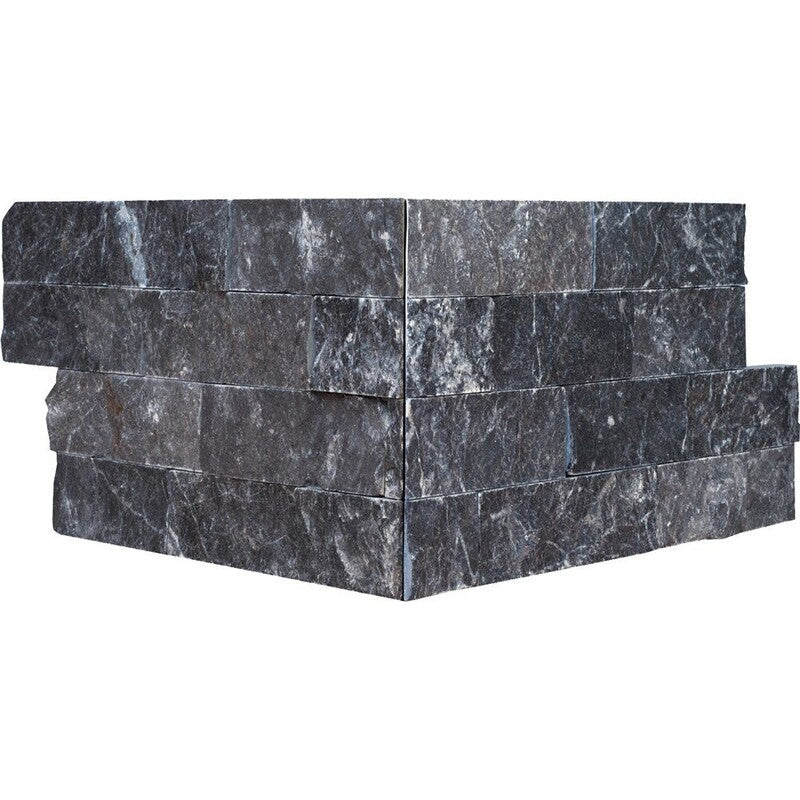
LEDGER STONE : Wall Panel Corner (rock face | 6"x12"x3/4" | straight cut)
This product is currently out of stock.
Ebon Elegance: A Study in Modern Grandeur
In the quiet drama of contemporary interiors, few materials command attention with the quiet authority of black marble. This 6x12-inch rectangular tile, hewn in a solid, unbroken plane of midnight depth, is a masterstroke of restrained opulence. Its straight-cut edges and 3/4-inch thickness lend it a deliberate weight—an architectural whisper of permanence and precision. Designed as a corner accent for walls, it transforms the utilitarian into the sublime, turning junctions into moments of contemplation.
Read More ›Choose options
Size
6"×12"×3/4"
Shape
Rectangle
Width
6.0 in
Length
12.0 in
Thickness
0.75 in
Material
Natural Stone
Material Type
Marble
Surface
Finish
Rock Face
Weight / Piece
11.02 lb
Weight / Box
66.12 lb
lb / sqft
22 lb
Sqft / Piece
0.5
Sqft / Box
3.0
Pieces / Box
6
Pieces / Box
6
Walls
Residential Interior
Commercial Interior
Shower
Outdoor
Floors
Residential Interior
Residential Light
Commercial Interior
Shower
Outdoor
Special Applications
Backsplash
Countertop
Dimensions Notice: All natural stone dimensions are nominal and actual sizes may vary.
If your project requires exact measurements, please contact us
or order a sample before purchasing.
Order Processing Time: Once your payment is received, all NON-SPECIAL
ORDERS, INCLUDING SAMPLE ORDERS will take a min of 5-7 business days to prepare &
process for shipping. This is just an estimate, please take this time frame into
consideration BEFORE inquiring about the status of your order. Thank you!
Dimensions
Size
6"×12"×3/4"
Shape
Rectangle
Width
6.0 in
Length
12.0 in
Thickness
0.75 in
Material
Material
Natural Stone
Material Type
Marble
Surface
Finish
Rock Face
Weight & Coverage
Weight / Piece
11.02 lb
Weight / Box
66.12 lb
lb / sqft
22 lb
Sqft / Piece
0.5
Sqft / Box
3.0
Pieces / Box
6
Packaging
Pieces / Box
6
Usage
Walls
Residential Interior
Commercial Interior
Shower
Outdoor
Floors
Residential Interior
Residential Light
Commercial Interior
Shower
Outdoor
Special Applications
Backsplash
Countertop
Disclaimers
Dimensions Notice: All natural stone dimensions are nominal and actual sizes may vary.
If your project requires exact measurements, please contact us
or order a sample before purchasing.
Order Processing Time: Once your payment is received, all NON-SPECIAL
ORDERS, INCLUDING SAMPLE ORDERS will take a min of 5-7 business days to prepare &
process for shipping. This is just an estimate, please take this time frame into
consideration BEFORE inquiring about the status of your order. Thank you!