
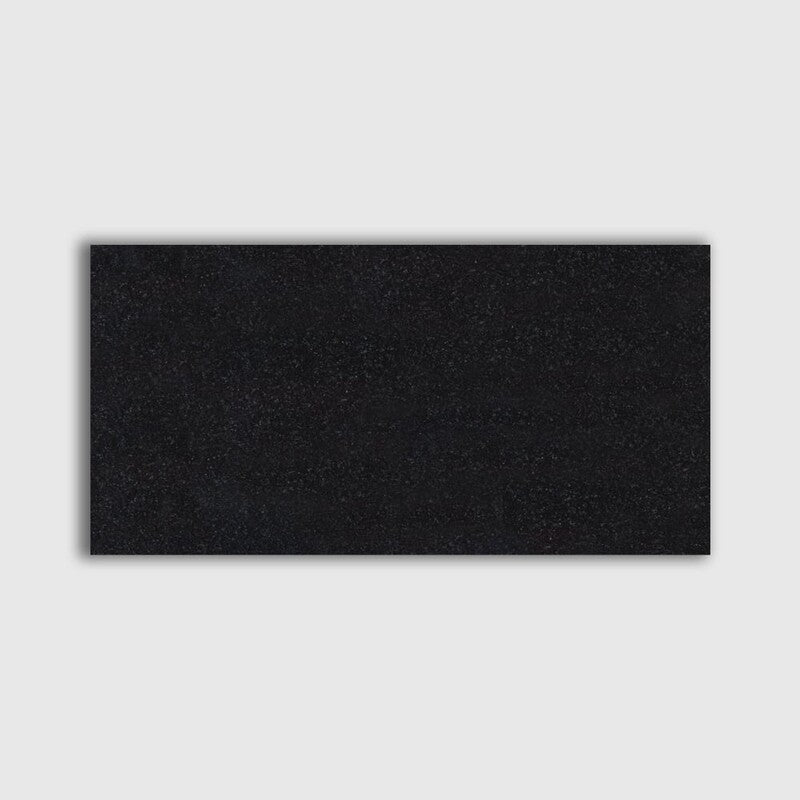
ABSOLUTE BLACK EXTRA: Granite Rectangle Field Tile (polished | 12"x24"x3/8" | straight cut)
Stocked in USA6 pieces = 12.0 sqft per box.
Ebon Elegance: Polished Black Granite Flooring
In the quiet language of luxury, few materials speak as eloquently as polished black granite. This rectangular tile, cut to a commanding 12x24 scale, is a study in modern refinement—a surface that transforms the ordinary plane of a floor into a statement of uncompromising sophistication. Its deep, unbroken black hue absorbs light with a velvety intensity, while the mirror-like polish reflects it back in subtle, liquid ripples. Here, the duality of granite is revealed: at once substantial and serene, grounding a space with its weighty presence yet elevating it through sheer, luminous depth.
Read More ›Choose options
~ / est. Estimated. Area coverage is calculated from nominal dimensions and varies with piece size, layout, and grout. Use as a planning guide, not an exact figure.
Dimensions
Material
Weight & Coverage
~ / est. Estimated. Area coverage is calculated from nominal dimensions and varies with piece size, layout, and grout. Use as a planning guide, not an exact figure.